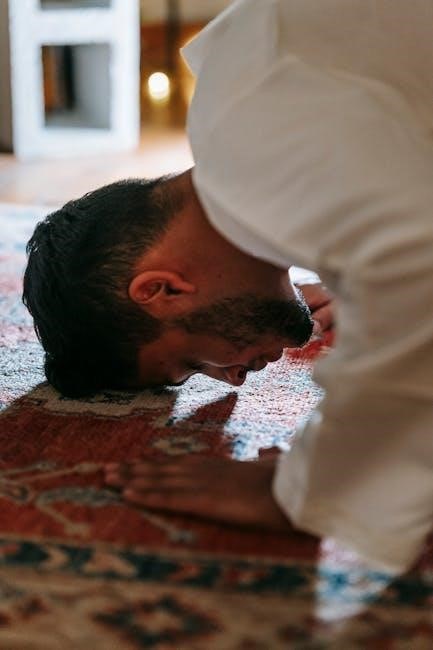
Salah‚ the cornerstone of Islamic practice‚ is a direct connection with Allah. Beginner’s guides‚ often available as PDFs‚ simplify learning the fundamentals of this essential ritual‚ offering step-by-step instructions.
What is Salah and its Importance?
Salah‚ or Islamic prayer‚ represents a profound spiritual connection between a Muslim and Allah. It’s one of the Five Pillars of Islam‚ making it a fundamental obligation for all believers. Numerous resources‚ including beginner’s guides in PDF format‚ detail its significance. These guides emphasize that Salah isn’t merely a ritual; it’s a means of seeking guidance‚ expressing gratitude‚ and strengthening faith.
For beginners‚ understanding the importance of Salah is crucial. It’s a daily reminder of devotion and submission to God. PDFs often explain that Salah purifies the heart‚ prevents wrongdoing‚ and fosters a sense of peace. Learning through animated guides and step-by-step instructions‚ readily available online‚ makes grasping the essence of Salah accessible to all.
The Five Daily Prayers

Islam prescribes five daily prayers‚ collectively known as Salah. These are Fajr (dawn)‚ Dhuhr (midday)‚ Asr (afternoon)‚ Maghrib (sunset)‚ and Isha (night). Beginner’s PDF guides often detail the specific times for each prayer‚ adjusted based on location and the sun’s position. Understanding the number of rak’ahs (units of prayer) for each is also key – Fajr has two‚ while Dhuhr‚ Asr‚ and Isha typically have four‚ and Maghrib has three.
These PDF resources simplify learning the prayer schedule and the associated rituals. Consistent performance of these five prayers is considered a vital component of a Muslim’s faith‚ fostering discipline and a continuous connection with Allah. Animated tutorials further aid beginners in mastering the correct procedures.

Preparation for Prayer (Wudu ⎼ Ablution)
Wudu‚ or ablution‚ is essential before Salah. Beginner PDF guides detail the steps – washing face‚ arms‚ and feet – ensuring ritual purity for prayer.
Steps of Performing Wudu
Wudu‚ the ritual ablution‚ prepares a Muslim for prayer. Beginner guides‚ often found as PDFs‚ outline a specific sequence. First‚ make the intention (niyyah) to perform wudu. Then‚ wash both hands up to the wrists‚ three times. Next‚ rinse the mouth thoroughly‚ followed by sniffing water into the nostrils and blowing it out‚ repeated three times.
Afterward‚ wash the face from hairline to chin and ear to ear. Then‚ wash both arms up to the elbows‚ including the forearms‚ three times each. Wipe the entire head with wet hands‚ starting from the forehead. Finally‚ wash both feet up to the ankles‚ ensuring water reaches between the toes. Completing these steps with mindful intention ensures a valid wudu‚ readying the worshipper for Salah.
Things That Invalidate Wudu
Understanding what breaks Wudu is crucial for maintaining a state of ritual purity. Beginner PDF guides detail several invalidators. Any discharge from the body – such as urination‚ defecation‚ or passing gas – immediately nullifies wudu. Similarly‚ deep sleep renders wudu invalid‚ requiring its renewal upon waking.
Other factors include touching one’s private parts directly without a barrier‚ and converting to a non-Muslim faith. Certain scholarly opinions also include consuming something that significantly alters the mind. Being aware of these factors ensures Muslims consistently perform Salah in a state of purity‚ adhering to Islamic guidelines for proper worship.
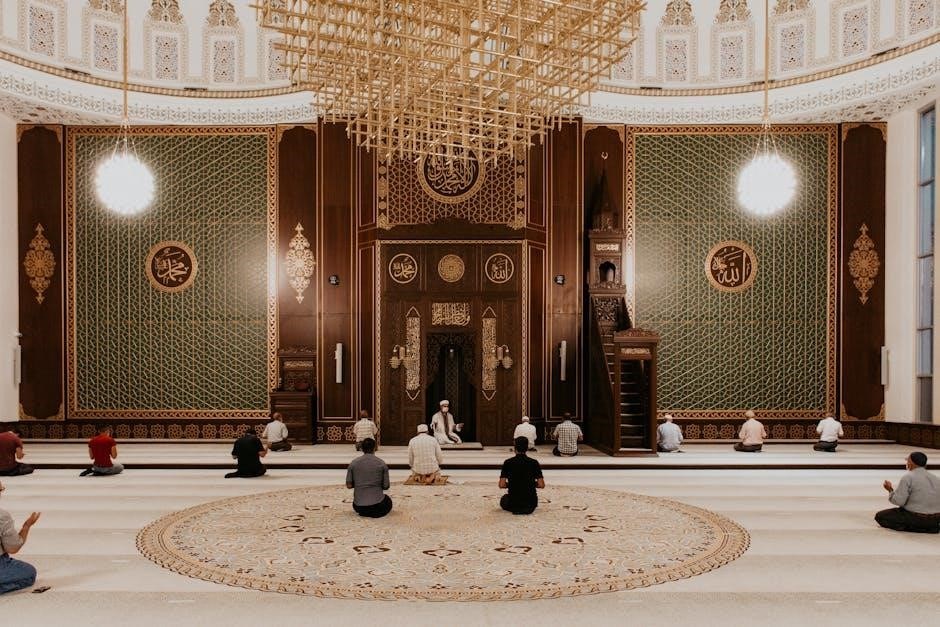
Essential Elements of Prayer
Salah requires facing the Qibla (Kaaba) and sincere intention (Niyyah). Beginner PDF guides emphasize these foundational aspects for a valid and accepted prayer.
Facing the Qibla (Direction of Prayer)
Facing the Qibla‚ the sacred Kaaba in Mecca‚ is a fundamental requirement for valid Salah. Beginners learning how to pray in Islam‚ often through PDF guides‚ must determine the correct direction from their location. Numerous apps and websites provide Qibla locators‚ utilizing GPS technology to pinpoint Mecca’s direction accurately.
It’s crucial to ensure your body is aligned towards the Qibla during all phases of prayer – standing‚ bowing‚ and prostration. While absolute precision isn’t always achievable‚ sincere effort is paramount. Beginner resources emphasize that a slight deviation is permissible if unintentional. Understanding the importance of the Qibla fosters a sense of unity among Muslims worldwide‚ all turning towards the same sacred point in worship.
Intention (Niyyah)
Niyyah‚ the sincere intention‚ is a crucial‚ yet often unseen‚ element of Salah. Beginner’s guides‚ including those in PDF format‚ highlight that prayer without genuine intention is considered invalid. This intention isn’t verbally pronounced; it’s a conscious resolve in the heart to perform the prayer for Allah’s sake.

Before commencing prayer‚ mentally formulate your intention to pray a specific prayer (Fajr‚ Dhuhr‚ etc.). This internal declaration clarifies the purpose of your worship. Resources emphasize that the Niyyah isn’t a rigid formula but a heartfelt commitment. A pure intention elevates the prayer‚ making it a meaningful act of devotion and strengthening one’s connection with the Divine.

The Steps of Performing Salah (Prayer)
Salah involves a sequence of actions: standing‚ bowing‚ prostrating‚ and sitting. PDF guides for beginners detail each step‚ ensuring correct posture and recitation for a valid prayer.
Standing (Qiyam)
Qiyam‚ the initial standing posture in Salah‚ is fundamental. Beginners’ PDF guides emphasize facing the Qibla – the Kaaba in Mecca – with a respectful and attentive stance. Hands are typically clasped before the chest‚ though variations exist.
During Qiyam‚ Muslims begin with the Takbir (saying “Allahu Akbar”)‚ glorifying God. This is followed by reciting Surah Al-Fatiha‚ the opening chapter of the Quran‚ and often additional verses. Maintaining focus and humility is crucial. Guides often illustrate proper foot placement and body alignment. A calm and collected demeanor is encouraged‚ preparing the heart for communication with Allah. Understanding this initial phase‚ as detailed in beginner resources‚ is vital for a correct prayer.
Bowing (Ruku)
Ruku‚ the bowing posture in Salah‚ follows Qiyam. Beginner’s PDF guides illustrate bending from the waist‚ keeping the back relatively straight and hands on the knees. This isn’t a full bend‚ but a respectful incline demonstrating submission to Allah.
During Ruku‚ Muslims recite Tasbih – glorifying God with phrases like “Subhana Rabbiyal Azim” (Glory be to my Lord‚ the Most Great). Maintaining stillness and focus is key. Guides emphasize avoiding rushing this step. Proper form‚ as depicted in instructional materials‚ ensures the prayer’s validity. Returning to the standing position after Ruku is also a deliberate act‚ preparing for the next phase of Salah.
Prostration (Sujud)
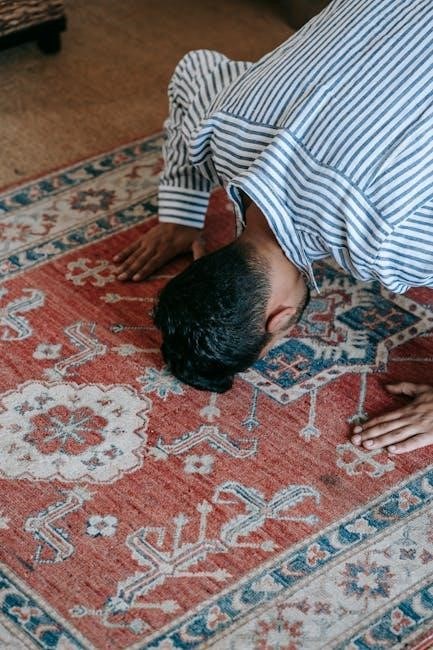
Sujud‚ or prostration‚ is a central act in Salah‚ signifying complete humility before Allah. Beginner’s PDF guides detail lowering the forehead‚ nose‚ palms‚ knees‚ and toes to the ground simultaneously. This is done after rising from Ruku.
During Sujud‚ specific supplications (du’a) are recited‚ seeking closeness to God. Guides stress maintaining stillness and focus. It’s repeated twice within each rak’ah. Proper form‚ often visually demonstrated in learning resources‚ is crucial. Rising from Sujud transitions the prayer‚ preparing for the sitting position (Julus)‚ completing a cycle of reverence and devotion.
Sitting (Julus)
Julus‚ the sitting posture in Salah‚ follows Sujud and provides a brief respite before completing a rak’ah. Beginner’s guides‚ often in PDF format‚ illustrate the proper way to sit – maintaining a relaxed posture with knees slightly bent;
During Julus‚ specific testimonies of faith (tashahhud) are recited‚ reaffirming belief in Allah and His Messenger. These are fundamental to the prayer. The guides emphasize clear pronunciation. For men‚ it’s typically sitting with the left buttock on the ground; women may tuck their feet. This position prepares for the final Sujud‚ concluding the cycle.

Recitation During Prayer
Recitation is central to Salah‚ beginning with Al-Fatiha. Beginner PDF guides provide transliteration and translations‚ aiding correct pronunciation for newcomers to Islamic prayer.
Opening Chapter (Al-Fatiha)
Al-Fatiha‚ the opening chapter of the Quran‚ is recited in every rak’ah (unit) of prayer and holds immense significance. Beginner’s guides‚ frequently found as PDFs‚ emphasize its importance and provide the Arabic text alongside transliteration and English translations to assist new Muslims. Understanding the meaning of Al-Fatiha deepens the connection with Allah during Salah.
These guides often break down each verse‚ explaining its message of praise‚ gratitude‚ and seeking guidance. Correct pronunciation is also highlighted‚ with phonetic guides aiding learners. Mastering Al-Fatiha is a foundational step in learning to pray‚ as it forms the core of the prayer’s recitation. Resources emphasize consistent practice to achieve fluency and comprehension.
Additional Chapters from the Quran
Following Al-Fatiha‚ reciting additional chapters (surahs) from the Quran is customary in each rak’ah. Beginner’s PDF guides often suggest starting with shorter chapters‚ like Al-Ikhlas‚ Al-Falaq‚ and An-Nas‚ to build confidence. These resources provide the Arabic text‚ transliteration‚ and English translations‚ facilitating comprehension for new learners.
Guides emphasize the importance of understanding the meaning of the recited verses‚ even if initially focusing on correct pronunciation. Gradually‚ beginners can expand to longer chapters as their fluency improves. Consistent practice‚ aided by these readily available resources‚ fosters a deeper connection with the Quran during Salah and enhances the spiritual experience.

Number of Rak’ahs (Units of Prayer)
PDF guides for beginners detail the rak’ah count for each daily prayer: Fajr (2)‚ Dhuhr (4)‚ Asr (4)‚ Maghrib (3)‚ and Isha (4).
Fajr (Dawn) Prayer ⎼ Number of Rak’ahs
Fajr‚ the first prayer of the day‚ holds a special significance for Muslims‚ often performed before sunrise. Beginner’s PDF guides consistently illustrate that Fajr prayer consists of two rak’ahs (units of prayer). These rak’ahs are typically shorter in duration compared to other daily prayers‚ reflecting the quiet and peaceful nature of the early morning hours.
Learning the steps for Fajr prayer is often the initial focus for newcomers‚ as it’s the first opportunity to establish a daily connection with Allah. Many resources emphasize the importance of performing Fajr on time‚ highlighting its spiritual benefits. Detailed PDFs break down each element‚ from the initial takbir (declaration of greatness) to the final taslim (greeting of peace)‚ ensuring a clear understanding for beginners.
Dhuhr (Midday) Prayer ⎼ Number of Rak’ahs
Dhuhr prayer‚ performed after the sun has passed its zenith‚ is one of the five obligatory prayers in Islam. Beginner’s guides‚ frequently available as PDFs‚ clearly state that Dhuhr prayer comprises four rak’ahs (units of prayer). These rak’ahs are generally recited at a moderate pace‚ allowing for focused contemplation and devotion.
Many introductory resources emphasize the importance of punctuality for Dhuhr prayer‚ as it represents a midday pause for spiritual reflection. PDFs often include visual aids and step-by-step instructions to help beginners navigate the four rak’ahs correctly‚ covering aspects like recitation‚ bowing‚ and prostration. Mastering Dhuhr is a key step in establishing a consistent prayer routine.
Asr (Afternoon) Prayer ⎼ Number of Rak’ahs
Asr prayer‚ offered in the afternoon‚ holds significance as a bridge between the day’s activities and the approaching evening. Beginner’s guides‚ often found as downloadable PDFs‚ consistently indicate that Asr prayer consists of four rak’ahs. These rak’ahs are typically performed with a sense of calm and preparation for the evening.
Resources for new Muslims frequently highlight the importance of performing Asr before the sun begins to turn red. PDF guides often detail the proper timing and sequence of the four rak’ahs‚ including the necessary recitations and physical postures. Understanding Asr prayer is crucial for maintaining a regular and fulfilling prayer schedule.
Maghrib (Sunset) Prayer ⎻ Number of Rak’ahs
Maghrib prayer‚ performed immediately after sunset‚ marks the transition from day to night. Numerous beginner’s guides‚ readily available as PDF downloads‚ clearly state that Maghrib prayer comprises three rak’ahs. These rak’ahs are a vital part of the daily five prayers‚ offering a moment of gratitude for the blessings of the day.
PDF resources for learning Salah emphasize the importance of performing Maghrib prayer shortly after sunset‚ before the twilight completely fades. Detailed instructions within these guides outline the correct sequence of the three rak’ahs‚ ensuring beginners can confidently fulfill this obligation. Consistent practice‚ aided by these resources‚ is key.
Isha (Night) Prayer ⎻ Number of Rak’ahs
Isha prayer‚ offered after nightfall‚ concludes the cycle of daily obligatory prayers. Beginner’s guides‚ often found as convenient PDFs‚ consistently indicate that Isha prayer consists of four rak’ahs. These rak’ahs provide a peaceful conclusion to the day‚ fostering a deeper connection with Allah.
Many PDF resources dedicated to learning Salah detail the proper timing and execution of Isha prayer. They emphasize performing it within a specific timeframe after sunset‚ before dawn approaches. These guides break down the four rak’ahs into manageable steps‚ making it accessible for beginners to learn and practice.

Common Mistakes in Prayer and How to Avoid Them
PDF guides for beginners highlight common errors like incorrect recitation or improper postures. Consistent practice and referencing reliable resources can effectively minimize these mistakes.
Incorrect Recitation
Incorrect recitation of verses from the Quran during Salah is a frequent mistake among beginners. Many PDF guides emphasize the importance of learning the proper Tajweed (rules of pronunciation). Mispronouncing words can alter their meaning‚ impacting the prayer’s validity.
Beginners often struggle with Arabic phonetics. Resources suggest starting with slow‚ deliberate recitation‚ utilizing audio recordings from qualified reciters. Focusing on accurate pronunciation‚ even if it means reciting less‚ is crucial. Regularly reviewing the verses and seeking guidance from knowledgeable individuals can significantly improve recitation accuracy. Don’t hesitate to use beginner-friendly PDFs that offer transliteration alongside Arabic text.
Improper Postures
Improper postures during Salah are common‚ particularly for those new to the practice. Beginner’s PDF guides often include detailed illustrations demonstrating the correct form for Qiyam (standing)‚ Ruku (bowing)‚ Sujud (prostration)‚ and Julus (sitting); Maintaining a straight back during standing and ensuring the forehead and nose touch the ground in prostration are key.
Many find it challenging to coordinate movements smoothly. Practicing in front of a mirror can help identify and correct postural errors. Resources emphasize the importance of performing each posture with humility and focus. PDFs frequently advise seeking guidance from experienced Muslims to ensure proper technique and avoid invalidating the prayer.
Resources for Learning Salah
Numerous PDF guides and online tutorials simplify learning Salah for beginners. Websites like Masjid ar-Rahmah offer comprehensive guides‚ while animated PDFs visually demonstrate proper technique.
Beginner’s Guides & PDFs
For those embarking on their journey to learn Salah‚ numerous readily available resources exist‚ particularly in PDF format. These guides are specifically designed for newcomers‚ breaking down the complexities of Islamic prayer into manageable steps. A popular resource‚ often titled “How do I pray – a beginners guide to Islamic prayer through animation.pdf”‚ provides visual learning alongside clear definitions and translations of key Arabic terms.
Masjid ar-Rahmah also offers a comprehensive “Beginners Guide on How to Pray Salah”‚ accessible online for convenient study. These PDFs typically cover everything from the preparatory ablution (Wudu) to the precise movements and recitations within the prayer itself. They aim to empower individuals to establish a direct connection with Allah through proper and informed worship‚ offering a solid foundation for consistent practice.
Online Tutorials & Videos
Complementing PDF guides‚ a wealth of online tutorials and videos cater to visual learners seeking to master Salah. These resources often demonstrate the correct postures and movements‚ making it easier to grasp the practical aspects of prayer. Many platforms host step-by-step instructions‚ mirroring the content found in beginner’s PDFs but with the added benefit of dynamic demonstration.
The provided information highlights the value of learning alongside fellow Muslims at the mosque‚ but online resources offer flexibility. Animated guides‚ like the one referenced‚ simplify complex steps. These tutorials often include audio recitations‚ aiding in proper pronunciation. Utilizing both PDF guides and online videos provides a comprehensive learning experience‚ ensuring a strong understanding of Islamic prayer for beginners.